Often when God does something new he’s working in people all over the world at the same time, who are all responding in their own way. Some pray it through, some try it out, some write about it, some just feel it and start conversations. Eventually these early adopters start connecting with each other until a movement begins.
This is what God is doing now. There’s a new level of faith rising for everyday Christians to be just as significant as those employed in full time ministry. Maybe you can feel it too. It’s an unshakeable belief that God is with you, for you, on your side as you follow Jesus into what he’s called you to.
We all have our “God is With You” story. God calls you to do things you don’t think are possible. You surrender your comfort and security. Then God does amazing things. Or sometimes he doesn’t. And then we persevere. Because we love Jesus and share his longing that the world will turn to him. Here’s my WithYou story. My prayer is that in this next season all our stories come together for his glory.
2007: “Start a People Movement”
I had just laid myself off after leading a ministry for four years that I thought was in the middle of God’s plans for me and for Canada. I was all in. And then the Holy Spirit led me to give it back to the churches and shut down the central office, leaving me out of work.
As I slogged through a dark season and spent a lot of time in prayer, Jesus told me really clearly to “start a people movement”. I’d learned years earlier about people movements from the Perspectives course on world missions: everyone following the Holy Spirit’s call on their life, without depending on organizational structures or dynamic leaders. That picture still makes me weep.
As I listened through that summer, Jesus described my job in more detail: start a house church movement, transform the church, mobilize Canada to bless the world and justice for the nations. That seemed like too much so I asked if I could just pick one. He told me to look up 2 Thessalonians 1:11. It said, “With this in mind, we constantly pray for you, that our God may count you worthy of his calling, and that by his power he may fulfill every good purpose of yours and every act prompted by your faith.” So that’s how we got here.
I immediately started People Movement Consulting, helping leaders of churches, charities and businesses participate with what God had created them for. The Holy Spirit had me give that up to run Impact Nations, where he showed me his miraculous power and his delight in working through local leaders. I woke up one morning to Jesus telling me to give the ministry back to the founder; I was to launch my own ministry to help local leaders around the world. None of these roles seemed to provide any hope of supporting my family, but somehow God took care of us.
2014: “Multiply a Hundredfold”
I was in Kenya helping launch a tea company that we hoped would provide employment for thousands of people in that area. God told me that I would reap a hundredfold in a single year, like Isaac. I was staring at our one little “tea hut” and thinking, there’s no way we can expand to a hundred of those in a year; I wonder what he’s talking about.
Then my wife received a prophetic word in a public meeting in the United States: “You over there. Yes you. Please stand up. God says to tell your husband to stop, it’s not going to work.” So I shut down my company, disappointed my investors and waited to see what was next. It was another very difficult season.
Eight months later I became the Director of Global Mission for what was then called MB Mission. I was in a budget meeting when I realized I was in charge of 100 times more money and 100 times more people than when I received the word in Kenya almost a year earlier. We renamed the mission agency to “Multiply” and by the grace of God saw our network grow so that in one year we baptized a hundred times as many people and planted a hundred times as many churches as the year I started.
The really sweet thing about that role is that I didn’t know anyone there when I was hired, didn’t go to an MB church, spoke only English and had only one year of Bible College. But the first thing I ever remember God saying to me is when I was 5 or 6 years old. I was watching a garbage truck thinking I want a job jumping on and off a moving vehicle when I grow up. Then somehow I knew, no, I was going to have a national leadership position with the MBs. 44 years later, God brought that about without my effort.
2021: “Do Not Be Afraid. I am With You”
At the beginning of the year Jesus began reminding me of the promises he’d made to me. There was nothing holding things up on his end. He needed me to be stronger and more courageous. Not just preparing for a harvest, but actively believing it was at hand and taking hold of it.
This contributed to some tension with the organization and I was asking Jesus what to do. He said “say yes to everything”. That’s how it came about that I began working on an app that I really didn’t want to develop. I’m so thankful for that moment, because this app has evolved into something that I think can support the exponential growth of a movement.
In March 2025 God said, “It’s time to leave, because my Spirit has more for you.” He told me not to actually resign, but to let it play out. A few months later, on my ten year anniversary, they blessed me and we parted ways. I’m so grateful for that season and Multiply’s investment in me. We continue to work together as partners in the kingdom.
Now I’m launching WithYou. It looks like a messaging app with “pathways” – small sets of steps to walk through. It’s actually a new way of walking together when you believe Jesus is with you. Like Airbnb qualified regular people to run little hotels, WithYou enables you to host a church. Like Uber made it possible to help people along their journey, WithYou equips you to make disciples of Jesus. It’s the scalable infrastructure to support a people movement.
Let’s Start a Movement
There are many times when people encounter Jesus: a Sunday service, a training event, or going out for coffee. WithYou is about continuing to walk together when you’re not in a meeting. It’s about the kingdom of God in the rest of your week, with all the challenges and opportunities of real life, multiplying the gospel throughout all your relational spheres.
Pathways extend discipleship moments into integrated life transformation. Here are some ways you can begin to experience pathways in your world:
Walk through a pathway. Sign up to receive pathways from me on my blog posts, each chapter of the book I’m writing, or passages of the Bible translation I’m working on. This will give you an idea how to use pathways with your material.
Ask for coaching. Pick a topic and we’ll go through a pathway. Tell me about the group you lead and we’ll make pathways for them. Maybe you have an event coming up that needs follow up pathways. Or let’s find the stage of your ministry on the Mission Strategy Map and see what pathways could help move things forward.
Try it out yourself. Sign up to pray for this movement, with weekly calls and pathways in between, or go through the Prayer First training for your own initiative. You can ask a friend if they’d like you to walk them through the WithYou Practices. Or have one of our team come to your house and help you host Lord’s Suppers.
Dream with me. We’re working on bringing practical good news to the global poor, proclaiming God is With You by getting behind their employment creation initiatives. And we’re developing a way to dramatically streamline event and project administration to free up paid staff to fully participate in this movement. If that’s something you’re already involved in, let’s talk about how WithYou can help.
I was talking with a friend yesterday about how Yahweh, the God of the Old Testament, is much more loving and kind than we give him credit for.
“Yes it’s true, but it’s hard to believe when you read the story of that prophet who got eaten by a lion just for listening to another prophet’s message”
So I said I’d look into it. Here’s my attempt….
1 Kings 13 is a crazy story. You really should read the whole thing, but here’s a summary if you’re already familiar with it:
A prophet rebuked Jeroboam, king of Israel, along with showing powerful signs that the word was from God. Jeroboam invited him home to eat, but the prophet had been commanded by God not to, so he left. Along the way he met a local prophet who claimed God was now OK with him eating there, so they had a meal together. But when he left he was killed by a lion for disobeying the original order. Then the lion just stood next to him for a long time, not eating him or his donkey.
What’s going on here? God seems deceptive and judgemental. The poor prophet! Let’s attempt to escape our modern western individualistic perspective and take a look at the bigger picture.
The Story is a Chiasm
A chiasm is a Hebrew literary structure that places the key idea at the center, with mirrored movements on either side. Like this:
The man of God prophesies against the altar at Bethel (vv.1–3)
Jeroboam attempts to seize him (vv.4–6)
Jeroboam invites him to eat; he refuses (vv.7–10)
The local prophet goes to find him (v.11–14)
The local prophet lies, saying an angel reversed God’s word (vv.15–19)
The local prophet pronounces his judgement (vv.20–22)
The man of God dies for eating and drinking (vv.23–25)
The old prophet retrieves his body (vv.26–30)
Jeroboam continues false worship at Bethel (vv.31–34)
The center—the lie—is what turns the whole story. Everything folds around the moment a prophetic word is reversed.
Eating Together was Covenantal
The man of God isn’t judged for turning back. He’s not condemned for listening. Judgment comes only after he eats.
“This is what the Lord says: You have defied the word of the Lord and have not kept the command the Lord your God gave you. You came back and ate bread and drank water in the place where he told you not to eat or drink. Therefore your body will not be buried in the tomb of your ancestors.” (1 Kings 13:21–22)
In biblical culture, eating isn’t neutral. Table fellowship is covenant language. It means trust, loyalty, agreement. By eating in Bethel, the prophet re-enters communion with a system God had already rejected.
The Lion and the Donkey
When the prophet is killed, the lion and donkey stand beside his body. The lion doesn’t maul the corpse. The donkey doesn’t flee. Both animals just wait, like signs frozen in time.
They aren’t random. They’re the symbols of Judah’s tribal calling in Jacob’s final blessing:
“You are a lion’s cub, Judah; you return from the prey, my son. Like a lion he crouches and lies down… The scepter will not depart from Judah… He will tether his donkey to a vine, his colt to the choicest branch.” (Genesis 49:9–11)
The man of God is from Judah. He was supposed to call Israel back. But he listens to the second voice and shares the wrong table. Judah’s strength and humility—the lion and the donkey—are still present, but they’re no longer moving.
A Mirror of Jeroboam’s Story
The prophet’s failure echoes the king’s. Both men began with a clear word from God. Both reversed it. Both fell.
Yahweh promises Jeroboam a lasting dynasty: “If you walk in obedience to me… I will build you a lasting house, as I did for David” (1 Kings 11:38).
Jeroboam fears losing power: “If these people go up to offer sacrifices… they will give their allegiance to Rehoboam” (1 Kings 12:26–27).
He creates a false worship system: “Behold your gods, O Israel, who brought you up out of Egypt… He built shrines on high places and appointed priests” (1 Kings 12:28–31).
A prophet condemns his rebellion: “You have done more evil than all who lived before you… you have aroused my anger and turned your back on me” (1 Kings 14:9).
Jeroboam’s name becomes a symbol of sin: “Because of the sins Jeroboam has committed and has caused Israel to commit” (1 Kings 14:16).
It’s a Prophetic Commentary
At the close of the chapter, the author tells us that Jeroboam’s other deeds are written in the official records of the kings. This is how most of the stories in the book of Kings end. It’s not just about the history, it’s the prophetic commentary on the history. The story is written to teach us something.
Fulfillment in Jesus
The lion and donkey appear again later—not in judgment, but in fulfillment. Jesus enters Jerusalem riding a donkey, as foretold by Zechariah:
“See, your king comes to you, righteous and victorious, lowly and riding on a donkey…” (Zechariah 9:9)
And in Revelation, he is named the Lion of Judah:
“Do not weep! See, the Lion of the tribe of Judah, the Root of David, has triumphed.” (Revelation 5:5)
The man of God in 1 Kings 13 dies because he couldn’t fulfill his calling to bring the message to the people. But Jesus from tribe of Judah, comes back to fulfill that original prophecy from Genesis 49.
Is the Story Crazy?
Yes, it still is. But looking at it prophetically, it’s also a warning about listening to anything that contradicts what God originally commanded.
From the man of God who died for listening, to King Jeroboam who’s whole family line was wiped out for building other altars, to the whole world eventually being judged for replacing the true God with religious counterfeits.
This story shows us how serious the consequences are if we listen to the second voice.
When Jesus met demons in crowd settings, they would typically cry out that he was the “Son of God”. But in direct confrontations, they always said, “What do you want with me/us?”. Ever wonder why that was their response? Was it just curiosity?
Demon in the synagogue:
“What do you want with us, Jesus of Nazareth? Have you come to destroy us?“ – Mk 1:24
“Go away! What do you want with us, Jesus of Nazareth? Have you come to destroy us? – Lk 4:34
Legion of demons at Gerasenes:
“What do you want with us, Son of God?” they shouted. “Have you come here to torture us before the appointed time?” – Mt 8:29
He shouted at the top of his voice, “What do you want with me, Jesus, Son of the Most High God? In God’s name don’t torture me!” – Mk 5:7
When he saw Jesus, he cried out and fell at his feet, shouting at the top of his voice, “What do you want with me, Jesus, Son of the Most High God? I beg you, don’t torture me!” – Lk 8:28
The phrase is a Semitic idiom (Hebrew and Aramaic, the language Jesus spoke) that means something like What are you doing here!?You’re operating outside your authority! So you can hear the demons even appealing to God’s name for Jesus not to torture them because it’s not the appointed time.
Jesus uses the same idiom when his mom tries to get him to do a miracle before the appointed time. It’s translated differently, but the Greek is exactly the same. Like, you’re outside your scope. You’re talking outside your authority. You have no jurisdiction in this area.
“Woman, why do you involve me?” Jesus replied. “My hour has not yet come.” – Jn 2:4
The phrase is the same in Hebrew, and is used in the Old Testament when people tried to operate outside their scope of authority. Like these:
When the Ammonites were rebuked for overstepping: Then Jephthah sent messengers to the Ammonite king with the question: “What do you have against me that you have attacked my country?” – Judges 11:12
When Abishai wanted to kill Shimei: But the king said, “What does this have to do with you, you sons of Zeruiah? If he is cursing because the Lord said to him, ‘Curse David,’ who can ask, ‘Why do you do this?’” – 2 Sam 16:10
When the corrupt northern king wants Elisha’s help: Elisha said to the king of Israel, “Why do you want to involve me? Go to the prophets of your father and the prophets of your mother.” – 2 Kings 3:13
When King Josiah tried to stop a Pharaoh from doing what God told him to do: But Necho sent messengers to him, saying, “What quarrel is there, king of Judah, between you and me? It is not you I am attacking at this time, but the house with which I am at war. God has told me to hurry; so stop opposing God, who is with me, or he will destroy you.” – 2 Chron 35:21
The Bible consistently says that evil spiritual beings, like the rest of creation, can only operate within the bounds that God assigns them. The demons had their assigned jurisdiction, from God. So they’re tell Jesus this is not his turf, at least, not yet. This is their defence in each case. They don’t realize the regime change has happened and they’re losing their place.
So now, the opposite is true. It’s us saying to the demons in Jesus’ name: “What are you doing here!? Jesus is King!”
Last weekend I ran into two people in opposite states. One was feeling pretty good about what they’d learned and was preparing to share that with others, assessing their spiritual maturity and giving them ways to grow. The other was falling back into old habits getting discouraged, wanting to be more disciplined.
My first impression of both of these was positive, but after a while I thought, is this just about self-improvement? Is there a bigger thought? God loves us and has enlisted us to join with him in saving the whole world. Why obsess about how we’re performing?
When I operate like that, it has to do with fear. Is God really loving? Because I’ve read the Old Testament. I like the gospels, but who is this God that wipes out whole peoples? Were they worse sinners than me? Or do I really get a pass because I was born after Jesus died for our sins? Or is God unchanging and I’m in danger? Better get back to work on my character!
Or, we could take another look at why God wiped out those nations. Or more specifically, which nations he destroyed.
The Nephilim
To do this we have to go back to just before the flood, when wickedness was everywhere.
The Nephilim were on the earth in those days—and also afterward—when the sons of God went to the daughters of humans and had children by them. They were the heroes of old, men of renown. – Gen 6:4
Note the Nephilim were still around after the flood. (The “flood” could’ve been lots of localized floods all over the world around the same time, as dozens of cultures have stories of their survivors and god-like rescuers.)
Nephilim Descendants
When the Israelites entered the promised land (also referred to as Canaan or the land of the Amorites) it was full of giants, now also called Anakim, Rephaim, Emim or Zamzummim.
We saw the Nephilim there (the descendants of Anak come from the Nephilim). We seemed like grasshoppers in our own eyes, and we looked the same to them.” – Nu 13:33
Hear, Israel: You are now about to cross the Jordan to go in and dispossess nations greater and stronger than you, with large cities that have walls up to the sky. The people are strong and tall—Anakites! You know about them and have heard it said: “Who can stand up against the Anakites?” – Dt 9:1-12
Israel’s Target
Israel conquered over a hundred kings/leaders associated with Nephilim-descended peoples: 60 under Og in Bashan, about 11 in Sihon’s territory, and 31 in Canaanite cities west of the Jordan.
Moses
Og king of Bashan was the last of the Rephaites. His bed was decorated with iron and was more than nine cubits long and four cubits wide. – Dt 3:11.
See, I have given into your hand Sihon the Amorite, king of Heshbon, and his country – Dt 2:24
Joshua:
Joshua totally destroyed them and their towns. No Anakites were left in Israelite territory; only in Gaza, Gath and Ashdod did any survive. – Josh 11:21-22
At that time there were probably over 400 kings or regional rulers across Mesopotamia, Egypt, Anatolia, Arabia, Africa, and India, not counting the Far East. The only region consistently marked for annihilation was Canaan. God never told Israel destroy idolaters in Egypt, Assyria, or Babylon. He even told them not to attack Edom, Moab, and Ammon (Deut 2:4–9).
God only commanded the complete destruction of one group: the nations descended from the Nephilim. That’s who they were focussed on.
The Emites used to live there—a people strong and numerous, and as tall as the Anakites. Like the Anakites, they too were considered Rephaites, but the Moabites called them Emites. – Dt 2:10-11
That too was considered a land of the Rephaites, who used to live there; but the Ammonites called them Zamzummites. They were a people strong and numerous, and as tall as the Anakites. – Dt 2:20-21
You yourself heard then that the Anakites were there and their cities were large and fortified, but, the Lord helping me, I will drive them out just as he said. – Josh 14:12
Finishing the Job
Later David and his men killed the last remaining Nephilim.
A champion [Hebrew: an “in between”] named Goliath, who was from Gath, came out of the Philistine camp. His height was six cubits and a span – 1 Sam 17:4
…. These four were descendants of Rapha in Gath, and they fell at the hands of David and his men. – 2 Sam 21:22
The Spiritual Story
God dissolved the kingdoms of the Nephilim through the flood(s). Then he promised Abraham the land of the Amorites. Over the next 400 years while the Israelites were in Egypt, the descendants of the Nephilim gathered together in Canaan and prepared to fight.
Like in Acts 4 “The kings of the earth rise up and the rulers band together against the Lord and against his anointed one” or many parts of Revelation, like 19:19 “I saw the beast and the kings of the earth and their armies gathered together to wage war against the rider on the horse and his army.”
This was foretold to Abraham:
In the fourth generation your descendants will come back here, for the sin of the Amorites has not yet reached its full measure. – Gen 15:16
These weren’t neutral tribes defending ancestral homes. They were spiritual descendants of an ancient rebellion, rising in one final stand against the God who had come to claim His land.
Our Saviour
So, yes, God loves us. He’s not randomly wiping out nations. He saved the earth from the Nephilim and their evil practices.
When you enter the land the Lord your God is giving you, do not learn to imitate the detestable ways of the nations there. Let no one be found among you who sacrifices their son or daughter in the fire, who practices divination or sorcery, interprets omens, engages in witchcraft, or casts spells, or who is a medium or spiritist or who consults the dead. – Dt 18:9-11
When I was 21, our university volleyball team spent a Christmas in South Korea, playing exhibition games for a week. They weren’t used to hosting westerners back then (I didn’t see another white person, even at the airport) but they did their best.
One night I ordered pizza from the hotel restaurant. The picture on the menu looked delicious. When it arrived however, I was dismayed to see it was made with processed cheese slices and topped with things like raisins and maraschino cherries. I’m guessing they saw a picture in a magazine and did their best to imitate it. So disappointing.
Lots of things we didn’t appreciate. Like having to sing as a group to the banquet hall after dinner. Standing every time someone older than us entered the room. Letting the Korean players leave their hand on your thigh while you travelled on the bus together. Nail heads sticking up out of the floorboards at one of the practice gyms. No heat at the games in the middle of winter. Having to visit the bath houses and see way too many naked men.
Looking back, engaging with another culture so intimately was an immense privilege which I mostly didn’t appreciate because my mindset was on my own comfort and enjoyment.
OK, I wasn’t as bad as the American tourist I overheard at one of the historical sites we visited. The lady finished an extremely demonstrative yawn with “Why can’t these people get themselves on the right timezone!”
As western Christians, our paradigm can be like that. As if we’re on vacation here. And if it rains, that’s interrupting our comfort and God needs to do something about it.
No Armies, Please
One place that comes from is in how our modern Bible translations present the Hebrew word tsābāʾ (צָבָא). It means army and appears 485 times in the Old Testament. (I should mention that in 13 of those it means “service” – we’ll ignore those.)
In the NIV, for example, when tsābāʾ refers to the Israelites at war, it’s translated as “armies”. But when it’s paired with Yahweh, the NIV switches to “LORD Almighty”. And when it refers to stars or celestial beings, it becomes “starry host” which is a lot more pleasant.
God is about armies. The phrase “is his name” appears most often as “‘Yahweh Armies’ is his name” The NIV renders it as The LORD Almighty is his name, because Yahweh Armies doesn’t make sense in English. But if you think of Yahweh as “I AM” it gets grammatically easier: “I am Armies is his name”. Like Yahweh Righteousness (Jer 23:6) or Yahweh Peace (Judges 6:24).
“‘Yahweh Armies’ is his name” – Is 47:4, 48:2, 51:15, 54:5; Jer 10:16, 31:35, 50:34, 51:19
I could only find two passages where army is paired with Yahweh unaltered in the NIV:
In Joshua 5, the “Commander of the army of Yahweh”
In Joel 2, Yahweh leads His army in judgment
Here are a few unfortunate missed opportunities to translate armies accurately. God rescued his armies from Egypt, and women are an army.
“the LORD brought the Israelites out of Egypt by their divisionsarmies” – Ex. 12:51
The Lord announces the word, and the women who proclaim it are a mighty throngarmy: “Kings and armies [same word] flee in haste; the women at home divide the plunder.” – Ps 68:11-12
Not only is the original Bible OK with armies, it goes into great detail about heavenly armies. The original wording is mostly hidden in the NIV, often by using the old English word “host”, which meant army.
Celestial Armies
Created to Praise God
Thus the heavens and the earth were completed in all their vast arrayand all their armies. – Gen 2:1
By the word of the Lord the heavens were made, their starry hostall the armies by the breath of his mouth. – Ps 33:6
Praise the Lord, all his heavenly hostsarmy, you his servants who do his will. – Ps 103:21
Praise him, all his angels; praise him, all his heavenly hostsarmies. – Ps 148:2
Under God’s Command
It is I who made the earth and created mankind on it. My own hands stretched out the heavens; I marshaled their starry hostscommanded their armies. – Is 45:12
He who brings out the starry hostarmies one by one and calls forth each of them by name. – Is 40:26
Micaiah continued, “Therefore hear the word of the Lord: I saw the Lord sitting on his throne with all the multitudes of heavenarmies of the heavens standing around him on his right and on his left.“ – 1 Ki 22:19 and 2 Chr 18:18
Punished for Receiving Worship Themselves
And when you look up to the sky and see the sun, the moon and the stars—all the heavenly arrayarmy—do not be enticed into bowing down to them and worshiping things the Lord your God has apportioned to [divided, distributed, assigned, allotted, parceled out] all the nations under heaven. – Dt 4:19
those who bow down on the roofs to worship the starry hostarmy of the heavens– Zeph 1:5 and many other places
All the stars in the skyarmy of the heavens will be dissolved and the heavens rolled up like a scroll; all the starry hostarmies of the heavens will fall like withered leaves from the vine. – Is 34:4
They will be exposed to the sun and the moon and all the starsarmy of the heavens, which they have loved and served and which they have followed and consulted and worshiped. – Jer 8:2
In that day the Lord will punish the powersarmy in the heavens above and the kings on the earth below. – Is 24:21
It grew until it reached the hostarmy of the heavens, and it threw some of the starry hostarmy of stars down to the earth and trampled on them. – Dan 8:10
In the New Testament
Suddenly a great company of the heavenly hostarmy appeared with the angel, praising God and saying – Luke 2:13
But God turned away from them and gave them over to the worship of the sun, moon and starsarmy of heaven. – Acts 7:42
We’re Not on Vacation
The Bible describes a God of Armies who commands heavenly armies and thinks we’re an army. Pass the lemonade is not what’s happening here. A battle is going on that’s bigger than our personal comfort, or even the physical world.
The very identity of our God is to be over all armies. He cares for us and comforts us like people who are in a war. As if we are being attacked by an enemy much more powerful than us!
He is our Hope:
Yahweh Armies is with us; the God of Jacob is our fortress. Come and see what the Lord has done, the desolations he has brought on the earth. He makes wars cease to the ends of the earth. He breaks the bow and shatters the spear; he burns the shields with fire. He says, “Be still, and know that I am God; I will be exalted among the nations, I will be exalted in the earth.” Yahweh Armies is with us; the God of Jacob is our fortress. – Ps 46:7-11
He is our Hero:
“Do not be afraid; you will not be put to shame. Do not fear disgrace; you will not be humiliated. You will forget the shame of your youth and remember no more the reproach of your widowhood. For your Maker is your husband—Yahweh Armies is his name—the Holy One of Israel is your Redeemer; he is called the God of all the earth. – Is 54:4-5
He is our Encouragement:
“Be strong, all you people of the land,” declares Yahweh, “and work. For I am with you,” declares Yahweh Armies.“This is what I covenanted with you when you came out of Egypt. And my Spirit remains among you. Do not fear.” This is what Yahweh Armies says: “In a little while I will once more shake the heavens and the earth, the sea and the dry land.I will shake all nations, and what is desired by all nations will come, and I will fill this house with glory,” says Yahweh Armies. “The silver is mine and the gold is mine,” declares Yahweh Armies. “The glory of this present house will be greater than the glory of the former house,” says Yahweh Armies. “And in this place I will grant peace,” declares Yahweh Armies. – Hag 2:4-9
Here’s how I remember communion being explained to me: The bread stands for Jesus’ body, broken for us, and the cup stands for His blood, poured out to forgive our sins. That was pretty much it.
It’s quite a personal thing in my tradition. I’m directed to close my eyes and bow my head and quietly remember what Jesus did for me on the cross.
I’m holding a little styrofoam wafer and a tiny plastic thimble of grape juice, head bowed, eyes closed.
But Scripture tells a different story. One of kings, battles, thrones, and victory.
Melchizedek
Genesis 14 is the Bible’s first war narrative. Four kings conquer five and people are taken captive—including Abram’s nephew, Lot. So Abram gathers his men, attacks at night, and defeats the kings. He rescues the captives and recovers the plunder….
Then Melchizedek king of Salem brought out bread and wine. He was priest of God Most High, and he blessed Abram, saying, “Blessed be Abram by God Most High, Creator of heaven and earth. And praise be to God Most High, who delivered your enemies into your hand.” – Gen 14:18-20
The bread and wine commemorate deliverance.
Passover
The foundational Israelite meal started when God saved Israel from Pharaoh and the Egyptian gods.
“This is how you are to eat it: with your cloak tucked into your belt, your sandals on your feet and your staff in your hand. Eat it in haste; it is the Yahweh’s Passover.On that same night I will pass through Egypt and strike down every firstborn of both people and animals, and I will bring judgment on all the gods of Egypt. I am Yahweh.“ (Ex 12:11-12)
The bread (no wine here) commemorates deliverance.
The Last Supper
On the weekend where Jesus defeats the dark powers, he is the Bread and the Wine.
“This is my body given for you; do this in remembrance of me.” In the same way, after the supper he took the cup, saying, “This cup is the new covenant in my blood, which is poured out for you.“ (Lk 22:19-20)
“Having disarmed the powers and authorities, he made a public spectacle of them, triumphing over them by the cross” (Col 2:15).
The bread and wine commemorate deliverance.
The Lord’s Supper
The deliverance that we’re proclaiming is not a small private thing. People in the church who were doing communion wrong were literally dropping dead as warnings to the rest of the final judgement.
For whenever you eat this bread and drink this cup, you proclaim the Lord’s death until he comes. So then, whoever eats the bread or drinks the cup of the Lord in an unworthy manner… eat and drink judgment on themselves. That is why many among you are weak and sick, and a number of you have fallen asleep… we are being disciplined so that we will not be finally condemned with the world. (1 Co 11:26-32)
The bread and wine remember and foreshadow deliverance.
Proclaiming Deliverance
When we partake in the Lord’s Supper together, it’s not just that Jesus loves me and forgives my sins. We’re declaring his victory over sin, death and the devil at a global scale. The King has overcome and reigns.
A somber snack in silence is the right format for me remembering what Jesus did for me. But that format doesn’t at all fit the Bible’s bigger story. Let’s make it a real feast with real bread and real wine to proclaim real victory.
The Hebrew word for earth—’erets—appears over 2,500 times in the Old Testament. Among nouns, only Yahweh, all, son, God, and king appear more often.
The Bible starts with the earth: “In the beginning, God created the heavens and the earth.” (Genesis 1:1)
We were created out of the earth, and named after the earth: “Then the Lord God formed the human (adam) from the dust of the ground (adamah)…” (Genesis 2:7)
Our original job was to take care of the earth: “The Lord God took the human and placed him in the garden of Eden to avad (work, cultivate, serve) and shamar it (guard, watch over, preserve).” (Genesis 2:15)
The big promises were about the earth:
“To your offspring I will give this land…” (Genesis 12:7)
“But as surely as I live, and as surely as the glory of the Lord fills the whole earth…” (Nu 14:21)
“For the earth will be full of the knowledge of the Lord as the waters cover the sea.” (Is 11:9)
“Behold, I create new heavens and a new earth… They shall build houses and inhabit them; they shall plant vineyards and eat their fruit…” (Is 65:17-25)
“They shall sit every man under his vine and under his fig tree, and no one shall make them afraid…” (Micah 4:1-4)
The warning was about the earth: “And if you defile the land, it will vomit you out as it vomited out the nations that were before you.” (Leviticus 18:28)
The earth was given to us: “The heavens are the heavens of the Lord, but the earth He has given to the children of humanity.” (Ps 115:16)
We are witnesses throughout the earth: ”But you will receive power when the Holy Spirit comes on you; and you will be my witnesses in Jerusalem, and in all Judea and Samaria, and to the ends of the earth.” (Acts 1:8)
The earth is waiting for us: “The creation waits with eager longing for the revealing of the sons of God… creation itself will be set free from its bondage…” (Ro 8:19-22)
And we’re waiting for the earth: “According to his promise, we are waiting for new heavens and a new earth in which righteousness dwells.” (2 Pe 3:13) and “Blessed are the meek, for they shall inherit the earth.” (Mt 5:5)
We will reign on the earth: “You have made them a kingdom and priests to our God, and they shall reign on the earth.” (Rev 5:10)
The story ends with the earth: “Then I saw a new heaven and a new earth… and I heard a loud voice from the throne saying, ‘Behold, the dwelling place of God is with humanity. He will dwell with them, and they will be His people.’” (Rev 21:1-3)
The Importance of the Earth
In the flood story, God could have wiped out the earth and taken us to Mars to start over. But he wiped us out and kept the earth. Read it afresh, noticing the bold:
The Lord saw how great the wickedness of the human race had become on the earth, and that every inclination of the thoughts of the human heart was only evil all the time. The Lord regretted that he had made human beings on the earth, and his heart was deeply troubled. So the Lord said, “I will wipe from the face of the earth the human race I have created– Gen 6:5-7
In the golden calf story, God was ready to wipe out Israel and start over with Moses. They clearly weren’t the point. But the earth mattered.
“The Lord said to Moses, “…Now leave me alone so that my anger may burn against them and that I may destroy them. Then I will make you into a great nation.” But Moses…said, “…Why should the Egyptians say, ‘It was with evil intent that he brought them out… to wipe them off the face of the earth’? …Remember your servants Abraham, Isaac and Israel, to whom you swore by your own self: ‘…I will give your descendants all this land’”– Ex 32:9-13
Return to Earth
We’ve grown used to a gospel designed to rescue us from the world. But what if the gospel is for the world—and we’re the workers, just like Adam and Eve in the garden?
Imagine a charitable organization where the primary beneficiaries are the staff. That’s easy to critique. But what if that’s us?
Maybe we’re not the chosen few who escape the earth. Maybe we’re the workforce sent to renew it.
Eventually by the grace of God I realized that I was stressing out about something. That’s often masked for me as I push aside my emotions to continue getting stuff done. But God has ways of getting my attention these days, and he cut through all my productivity to show me there’s an issue.
Eventually by the grace of God I realized was trying to control the situation. Thinking things through. Running best and worse case scenarios. Talking with Jesus a lot. Losing sleep some nights. Researching options with ChatGPT. Talking with my wife. Having a new idea every few hours. Once in a while having my stomach tighten when I had certain thoughts.
Eventually by the grace of God I realized my problem was fear. Fear is what motivates me to try to control my circumstances. But who was I afraid of? I ran through the various people involved and couldn’t sense anything intimidating about them. They’re not out to get me and don’t really have any significant power anyway.
Eventually by the grace of God I realized that I was afraid of the powers and principalities. Some hidden, evil force that could mess with people’s judgement, steer decisions, confuse communication, twist motives and trick us all into going the wrong direction. I was afraid they could trap me into saying things I didn’t mean, burning bridges, creating unnecessary conflict.
Eventually by the grace of God I realized that this is the opposite of everything I’ve been learning the last few months. Jesus is King over them all: powers, people, everything. I believe that, but I wasn’t acting like it. I was letting myself be intimidated by powers that no longer have any authority.
Eventually by the grace of God I realized that I didn’t need encouragement. I needed to repent. I was submitting to evil powers instead of King Jesus. Time for a 180 degree turn. So, without anything changing in my circumstances, without any word from the Lord about how it was going to go, and without any plan at all, I just repented. I said to God, “I will not fear. You are with me.” Just resolved to believe.
Immediately by the grace of God I felt a wave of love, joy and peace flood through my being. Seemed like it welled up from the Spirit within me. Or maybe it came from somewhere slightly behind me. Anyway, it was tangible, powerful evidence of Jesus’s presence. Most of the people I’ve shared this with recognize the experience. I’m calling it The Big Whoosh. Hallelujah!
I was prayer walking with a friend really early yesterday morning. He got to the trail first and was standing there laughing. I guess some guy had gotten out of his car and started walking, then noticed him just standing there and exclaimed, “Jesus Christ!” My friend responded that he wasn’t actually Jesus but he’s a good friend of His. Later on our walk we ran into the guy. My friend asked him if he’d like to get to know Jesus. The guy’s answer was interesting: “No, that’s not for me. But, no offense! Really, no offense, I’m not offended.”
In today’s world, even hinting at someone having spiritual authority sounds offensive. It feels like bad news. Judgmental. Our culture values tolerance. The worst thing you can do is come across as superior or narrow-minded.
This is a problem for us as Christians. We want to love people. To serve. To listen. We want the gospel to be heard as good news. Our generous, forgiving God has sent a Savior who welcomes everyone in.
I spend a lot of time reflecting on Jesus as King—about rule, government, authority—and it can be hard to see how that could possibly help. If anything, it sounds like the very thing our friends (and we ourselves) are trying to get away from.
And honestly humanity’s track record on this topic isn’t great. It seems like every generation that’s tried to live out Jesus’ kingship has picked a method that isn’t what Jesus or the apostles modelled….
1. Through Political Power
Christians have aligned with rulers, built Christian nations, crowned kings “by God’s will,” or passed laws to enforce biblical values. Sometimes the Church ruled directly; sometimes it steered from behind the scenes.
But Jesus never accepted that kind of power. When the crowds tried to crown Him, He slipped away. When Pilate questioned Him, He said His kingdom wasn’t from this world. He didn’t try to reform Rome—He called people to repent and follow.
The apostles didn’t take up political causes either. Paul stood before rulers in chains. Peter told believers to honor the emperor—not replace him. They weren’t trying to make governments Christian. They were declaring that Jesus already reigns.
2. Through Physical Violence
From crusades to colonization, Christians have used force to defend or expand the faith. The cross was stamped on shields, flags, and conquest.
But Jesus refused violence. He stopped Peter from drawing a sword. He surrendered willingly. He forgave His executioners. His victory came not through dominance, but through dying.
And the apostles walked the same path. They were beaten, imprisoned, and eventually killed—not for fighting back, but for refusing to stop preaching Christ.
3. Through Platforms and Popularity
We’ve built ministries, media empires, and personal brands. Influence has become the measure of spiritual authority.
Yet Jesus often avoided attention. He withdrew from crowds. He told the healed to keep quiet. He spent His time with a handful of disciples, not thousands of fans. Obedience mattered more than visibility.
The apostles followed His lead. They didn’t build platforms or attract followers. They planted churches quietly and suffered more rejection than recognition. Their authority wasn’t in how many people saw them—but in who sent them.
4. Through Enforced Religion
At times, the Church has tried to create Christian societies by requiring worship, punishing heresy, or legislating morality.
But Jesus never forced belief. He warned, called, and let people walk away. His harshest words were for religious leaders who demanded obedience but lacked mercy. He didn’t manage society—He called hearts.
The apostles didn’t enforce righteousness either. They preached repentance and trained believers in obedience, but they left space for the Spirit to work. Their goal was never a managed culture—but a faithful people.
5. Through Spiritualizing Authority
We’ve sometimes declared spiritual authority over cities, cultures, or institutions—assigning divine mandates or jurisdiction.
But Jesus never claimed spiritual territory. He healed, taught, and cast out demons, but He also wept over places that rejected Him. He didn’t announce control. He extended mercy.
The apostles didn’t claim dominion either. When miracles happened, they pointed to Jesus. When they spoke with power, it was to call people into the kingdom—not to declare ownership over it.
Jesus is Already King
I think the problem has been that we don’t believe that Jesus is already King. I think we’re trying too hard. Because when someone truly knows they have authority, they don’t need to grasp for control. They don’t force, perform, or panic. They’re secure, steady and free to love. Just like when he walked the earth, he doesn’t need us to make him King, because he already is.
Jesus, knowing that they intended to come seize him and make him king, withdrew again to a mountain by himself. – John 6:15 (from the Greek)
Jesus didn’t come to save us from the world. He came to save the whole world.
We often call Jesus “Savior,” but somewhere along the way we’ve reduced that word. For many, it simply means that Jesus forgives our sins and takes us to heaven. But that’s not what His name means—and it’s not how His mission works.
The name Jesus means “Yahweh saves”, as in “She will give birth to a son, and you are to give him the name Jesus, because he will save his people from their sins.” (Mt 1:21). Jesus is the Greek form of Joshua. Jesus’s Jewish friends spoke Aramaic, which is really close to Hebrew. So they would have called him Joshua (Yeshua). Names were really important in that culture. So it’s no accident that Jesus and Joshua have the same name.
Early believers had no concept of Jesus being their personal Savior. So what did they think Savior meant? Let’s look at the original Joshua and see what saving meant back then.
Joshua Saved the Land
You would think Moses would get the Savior name. That’s our whole paradigm today. The people were stuck in slavery, Moses led them out. Saved! But no, Joshua got the name “Yahweh saves”. Saves who or what?
The people of Israel were already saved from their Egyptian enemies. They hadn’t interacted with the Canaanites for 400 years, so they didn’t need saving from them. And the Canaanites weren’t saved either; they were wiped out. It was the land:
“Do not defile yourselves in any of these ways, because this is how the nations that I am going to drive out before you became defiled. Even the land was defiled; so I punished it for its sin, and the land vomited out its inhabitants. But you must keep my decrees and my laws. The native-born and the foreigners residing among you must not do any of these detestable things, for all these things were done by the people who lived in the land before you, and the land became defiled. And if you defile the land, it will vomit you out as it vomited out the nations that were before you.“ – Leviticus 18:24-28
The word “land” appears over 200 times in Joshua—far more than any person or enemy. The only thing that truly gets “saved” in Joshua’s story… is the ground.
The Bible Is a Land Story
“If my people… turn from their wicked ways… I will forgive their sin and heal their land.” (2 Chronicles 7:14)
“The earth will be filled with the knowledge of the Lord…” (Habakkuk 2:14)
Genesis opens with a garden. God forms the earth (adamah) for humans (adam) to tend and rule. The first command isn’t spiritual—it’s to fill the earth and subdue it. But the earth is immediately affected by sin. The ground is cursed. Blood cries out from the soil. Humanity was supposed to care for creation but instead corrupts it.
God responds with a flood to cleanse the earth from sin. He wipes out the humans to start over. Then He promises Abraham a land. Moses delivers them out of a foreign land. Joshua enters the land. The prophets warn about polluting it. Their punishment is to be exiled from the land.
The New Testament continues this theme:
The creation waits in eager expectation for the children of God to be revealed. For the creation was subjected to frustration, not by its own choice, but by the will of the one who subjected it, in hope that the creation itself will be liberated from its bondage to decay and brought into the freedom and glory of the children of God. We know that the whole creation has been groaning as in the pains of childbirth right up to the present time. – Romans 8:19-22
In Jesus’s day the Israelites understood being under Roman occupation as a consequence of their sin. This is why so many were willing to be baptized by John. They needed to be cleansed so that the Messiah could give them back their land.
Jesus walked the land, told stories about soil and seeds, healed people’s bodies, stilled storms, and raised the dead. He never spoke of escaping the world. Instead, He acted like someone reclaiming it. When He rose from the ground, He didn’t rise into heaven immediately. He rose onto the earth and walked in a garden.
He told His followers to go—not to heaven, but to the nations. To every land. Not to escape, but to restore. And the Bible doesn’t end with souls in the sky. It ends with a new earth.
“Then I saw a new heavens and a new earth… and I heard a voice saying, ‘Behold, the dwelling place of God is with man.’” (Revelation 21)
“They shall reign on the earth.” (Revelation 5:10)
What If the Whole Story Was Never About Us?
What if salvation isn’t about our personal rescue, but about God reclaiming the world? What if we’re not the main characters, but the workers? What if Jesus came not to save us from the world, but to save the whole world from sin?
We are the tenants in the vineyard. He is the heir. And the earth still belongs to Him. Jesus didn’t come to evacuate us. He came to reclaim what’s His.
But you will receive power when the Holy Spirit comes on you; and you will be my witnesses in Jerusalem, and in all Judea and Samaria, and to the ends of the earth. – Acts 1:8
So when we call Him Savior, it doesn’t just mean My personal Savior, it means He is the one who saves the world.
“The kingdom of God is at hand. Repent and believe the good news.” – Mark 1:15
Kingdom of God
Jesus’s message was meant to be simple and direct. But what exactly is the kingdom? Somehow we’ve lost the meaning of the key word in the main message.
Reignof God
The Greek word βασιλεία (basileia) means rule or reign. It’s technically a better translation, and it makes more sense of the parables. When Jesus is asked what the basileia of God is like, he doesn’t answer with a description of a kingdom, but of how God reigns, like a mustard seed growing or yeast working its way through dough.
But it’s not a common English word. And it doesn’t flow well with the verbs mostly used alongside basileia in the New Testament:
Receive the reign (28x)
The reign comes near (18x)
Enter the reign(16x)
Proclaim/preach the reign (11x)
Empire of God
Lately I’ve been wondering about empire. Makes more sense than reign here:
I confer on you an empire, just as my Father conferred one on me,so that you may eat and drink at my table in my empire and sit on thrones, judging the twelve tribes of Israel. – Luke 22:29-30
And works better with the verbs:
Receive the empire – welcome God’s government
The empire comes near – like the Roman army approaching
Enter the empire – switch sides
Proclaim the empire – announce regime change
Of course empire sounds oppressive. Colonial. Like Star Wars or Caesar. Wouldn’t that distort Jesus’ message? But consider: basileia had all the same baggage, and Jesus used it anyway. He didn’t say “the kingdom is like feeling peace.” He said it’s like a king coming back to settle accounts (Matt 25).
To first-century ears, basileia didn’t sound safe, intimate, or mystical. It meant a ruling regime, usually enforced by power, taxes, soldiers, and allegiance. Jesus intentionally used that word to frame His message as a direct challenge to the world’s systems of power.
There is no private version of the kingdom/reign/empire in the New Testament. When Jesus told Nicodemus, “You must be born again to enter the kingdom,” He wasn’t inviting him into a feeling. He was calling him into a regime change.
The good news isn’t just that Jesus leads and guides us. Or that he reigns in our hearts. Jesus isn’t just leading a movement. He’s establishing a worldwide empire—founded on love, won through sacrifice, and ruled by the King of kings.
“The empire of God is at hand. Repent and believe the good news.” – Mark 1:15
During my school years, from elementary through secondary, I led several of my friends into becoming Christians. At the time, that entailed them praying a prayer of forgiveness and accepting Jesus as their Saviour. Then, I would help them obey the Bible, because that’s what I thought it meant when people said “follow Jesus”.
Later I learned that through Jesus we’re under grace, not under the law. So it’s not about the rules. That was great news, but also made me wonder: why did we get such a better deal than the Israelites?
So I looked into it, and found the Hebrew word shama. It means to listen attentively, with the intent to respond. English doesn’t have a single word that carries the same richness. That’s why translators often default to “obey”—but that choice changes the tone. Listening is closer to what the Hebrew actually means. And that matters, because…
1. Mutual Listening
The same word shama is used for us listening to God and God listening to us, both with the intent to respond:
‘The Lord listened to me…’ (Deut 10:10)
‘God heard the boy crying…’ (Gen 21:17)
‘If you listen to the voice of the Lord…’ (Deut 28:1)
‘Follow Him and listen to His voice.’ (Deut 13:4)
2. Translation Decisions
English Bibles tend to translate shama as “obey” only when God is the one speaking. But the original Hebrew doesn’t make that distinction—it’s the same word in both cases.
About God: “Because you have obeyed me.” — Gen 22:18 (Hebrew: shamaʿta bĕqolî — “you listened to my voice”)
About Adam: “Because you listened to your wife…” — Gen 3:17 (Hebrew: shamaʿta lĕqōl ʾishtĕkha)
3. Rules Don’t Speak
English Bibles say things like “obey (shama) the commandments”, but you don’t listen to rules, you listen to a person. In the Old Testament, shama is never used with “law” (torah) or “commandments” (mitzvot) as its object. Concerning these, you:
Keep the commandments (shamar) — Deut 6:2
Do the law (ʿasah) — Leviticus 18:5
Walk in the statutes (halak) — Leviticus 26:3
4. Listen is the Closer Word
There is no Hebrew word that cleanly means “obey” in the modern, legalistic sense of complying with orders from above. The Old Testament doesn’t speak that way. It uses relational words:
shama – listen attentively, respond
shamar – guard, keep
ʿasah – do, act
halak – walk with, walk in
Imagine removing every use of the English word “obey” from the Old Testament. We’d still have every warning, every call to faithfulness and every consequence. But we’d hear it the way the original audience did: as a voice, not a rulebook.
So it turns out the Old Testament originally spoke of a covenant relationship with a loving God. And we translated it into obeying impersonal rules. They didn’t have such a bad deal after all.
If I had known this back in school, I wouldn’t have introduced my friends to a rulebook. I would have introduced them to a God who speaks. And “follow Jesus” would’ve meant what it was always supposed to mean.
In the high Andes of South America, the Inca ruled as gods. The Sapa Inca was the “Son of the Sun”. His face was never to be seen in public. His feet never touched the ground. His word was law, and his person was sacred. When he died, one heir ruled, but the mummy of the dead god-king was still treated as alive, consulted for decisions, fed with offerings, carried through the streets on festival days.
In 1532, a Spanish envoy met Atahualpa, the last effective Sapa Inca. They had a priest with them who offered him a Bible that he refused (they had refused the cup of chicha he’d offered them). Then, with gunfire the Inca had never seen, the Spaniards massacred thousands of attendants and scattered his army.
Franciscan and Jesuit missionaries went to work establishing churches, schools, and missions across the former empire. The majority of the indigenous population was baptized within a few generations. But in many areas, Christianity was blended with traditional Inca beliefs. For example, the Virgin Mary was often associated with Pachamama (Mother Earth), and saints were venerated alongside mountain spirits (apus).
Taking the Promised Land
When Joshua led Israel into Canaan, the kings were divinely appointed spiritual rulers who lived in sacred cities. Some bore names like Adoni-Zedek, “Lord of Righteousness,” opposing Yahweh’s rule. Israel defeated all 31 of these kings. But then:
Another generation grew up who knew neither the Lord nor what he had done for Israel. Then the Israelites did evil in the eyes of the Lord and served the Baals. They forsook the Lord, the God of their ancestors, who had brought them out of Egypt. They followed and worshiped various gods of the peoples around them. – Judges 2:10-12
Conquest without Discipleship
The Americas no longer have god-kings, but Christianity has been mixed with traditional beliefs. In much of Central and South America, Catholicism has merged with older rituals—animism, superstition, and cosmic symbolism—leaving a hybrid faith where saints replace spirits, and the old gods still linger beneath new names. In North America, Jesus is Lord right there alongside health and wealth.
The thrones were toppled, but the people were never taught to follow the true King. The result is a shell of Christianity, hollowed out by superstition, prosperity, and power. The god-kings fell throughout the Americas, but the nations were not discipled.
1. Conquest and Mission (16th–17th centuries)
Peru — The Sapa Inca, “Son of the Sun,” ruled as a divine being until the Spanish conquest and Christian missions.
Mexico — Aztec, Mixtec, and Zapotec kings held divine titles and ruled through blood sacrifice until Spanish conquest and missionary expansion.
Guatemala, Belize, Honduras — Maya kings (k’uhul ajaw) were divine intermediaries until Spanish campaigns and Catholic missions.
Ecuador, Bolivia — Inca and pre-Inca rulers held divine status until Spanish conquest and Jesuit missions.
Paraguay — Guaraní chiefs were seen as divine intercessors until Jesuit Reductions reframed leadership under Christ.
Brazil — Tupi and Guaraní chiefs held religious-political power until Portuguese colonization and Jesuit influence.
Colombia — Muisca and Tairona chiefs served as sacred intermediaries until Spanish conquest and Catholic missions.
El Salvador, Nicaragua, Panama, Costa Rica — Indigenous leaders combined sacred and political roles until Spanish conquest and Christianization.
Cuba, Dominican Republic, Haiti, Jamaica, Puerto Rico, Bahamas — Taino chiefs held spiritual and ancestral authority until forced Christian conversion.
2. No Divine Kingship
Argentina, Chile, Trinidad and Tobago, Barbados, Uruguay — Indigenous leaders held sacred authority but were not deified; colonization, Christian missions, or republican reform redefined their roles or erased them entirely.
Canada, United States — Indigenous elders led clan-based spiritual communities, but had no divine monarchy; missions and colonization reshaped leadership.
Antigua and Barbuda, Dominica, Grenada, Saint Kitts and Nevis, Saint Lucia, Saint Vincent and the Grenadines – Arawak and Carib chiefs were spiritual guides, not god-kings.
Guyana, Suriname, Venezuela — Tribal leadership was communal and sacred, never centralized in divine kingship.
In the tribal cultures of Oceania, leadership was sacred. Divine rule didn’t come with golden thrones or marble temples, but it had weight. Chiefs weren’t elected—they were born, initiated, and revered. Their word shaped the tribe. Their rituals sustained the land. Their ancestry connected the people to the spirit world.
When the gospel came, it didn’t destroy sacred authority. It redeemed it.
One example is the Tu‘i Tonga—the king of Tonga. The dynasty descended from the god Tangaloa, and the king served not just as a political head, but as a living bridge between heaven and earth. His body was sacred. His words carried spiritual authority.
This wasn’t so different from Israel’s early leaders—like Deborah, Gideon, and Samuel—who guided the people with prophetic insight, ancestral authority, and spiritual power. They were tribal figures, rooted in the life of the people, called by God in times of need. They didn’t sit on thrones. But their authority was sacred.
“The Lord raised up judges, who saved them out of the hands of these raiders.” —Judges 2:16
In Tonga, Jesus didn’t eliminate the spiritual leaders, he redeemed them.
In 1830 a high chief, Aleamotuʻa, was baptized, taking the name Josiah. As Tu‘i Kanokupolu, his conversion shook the islands. He openly renounced the traditional gods and declared allegiance to Christ. Within months, over 1,000 people on the Tongatapu island were baptized.
The next year, in 1831, the high chief of Vavaʻu publicly converted and ordered the destruction of local shrines. Hundreds followed. By the end of the decade, many sacred titles had been surrendered, ancient rituals abandoned, and the name of Jesus lifted in their place.
The god-kings lost their authority, as happened throughout Oceania in the last few centuries….
1. Island Revivals (19th century)
Tonga — The Tu‘i Tonga line surrendered divine claims after a nationwide revival.
Fiji — High chiefs held spiritual-political authority until Methodist missionaries led many to Christ.
Samoa — The Tama-a-Aiga chiefly lines had divine ancestry until the London Missionary Society.
Vanuatu — Chiefs mediated ancestral spirits until Presbyterian missions.
Micronesia — Tribal rulers claimed sacred power until German and American missionaries.
2. Colonial-Era Missions (19th–20th centuries)
Papua New Guinea — Chiefs and “big men” held spiritual influence before Christian missions.
Solomon Islands — Traditional chiefs held sacred social and spiritual authority until Anglican and other missionaries.
Kiribati, Tuvalu, Tokelau — Elder councils led spiritual life before the London Missionary Society.
Palau, Marshall Islands — Chiefs held ritual-political power until Catholic and Protestant missions.
3. Settler Cultures (19th–20th centuries)
New Zealand — Māori rangatira held mana (sacred authority) until some converted through missionary influence.
Australia — Aboriginal elders held cultural-spiritual authority before Christian missions.
In North Korea today, two colossal bronze figures rise above the capital. Citizens are required to bow, lay flowers, and step back in silence.
It’s like Nebuchadnezzar, who built an enormous statue of gold and demanded worship from every nation under his rule (Daniel 3).
Kim Il-sung and Kim Jong-il were more than political leaders. They were deified. Even after their deaths, Kim Il-sung remains the “Eternal President” and Kim Jong-il the “Eternal Chairman”.
“To my childish eyes and to those of all my friends, Kim Il-sung and Kim Jong-il were perfect beings, untarnished by any base human function. I was convinced, as we all were, that neither of them urinated or defecated. Who could imagine such things of gods?” – Kang Chol-hwan
Their portraits hang in every home. Their birthdays are celebrated as national holidays. Their stories are told with signs and wonders—new stars at birth, double rainbows at death, and miraculous childhood feats.
They restarted the calendar at Year 1, dating time from Kim Il-sung’s birth in 1912, the same year a bright star supposedly appeared in the sky. In official history, he single-handedly saved Korea from Japanese occupation, founded the nation, and created a paradise of self-reliance.
Like Nebuchadnezzar: “Is not this great Babylon, which I have built by my mighty power and for the glory of my majesty?” (Daniel 4:30)
But God replied: “You shall be driven from among men… until you know that the Most High rules the kingdom of men and gives it to whom he will.” (Daniel 4:32)
The king goes mad, his throne collapses, and finally, he admits: “His dominion is everlasting… all the inhabitants of the earth are accounted as nothing.” (Daniel 4:34–35).
The divinity that surrounded Kim Il-sung and Kim Jong-il is now unraveling under Kim Jong-un. His official biography had to be withdrawn for “distorted propaganda.” His childhood image was toned down.
As Jang Jin-sung put it in The Guardian: “It’s not that people really believe all this propaganda about Kim Jong-un, that he’s a god, and need someone to tell them otherwise or show them another way of thinking. North Koreans are people, and they aren’t stupid. In the North Korean system, you have to praise Kim….”
The throne still stands. But the people no longer worship. Perhaps this was the last remaining god-king in Asia. The rest had already been dethroned.
1. Early Christian Movements (4th–7th centuries)
Armenia — Kings claimed divine favor and priestly authority until the nation became the first to adopt Christianity as its official religion in ~301 AD.
Georgia — Sacred monarchy was redefined when Christianity spread in the 4th century.
2. Islamic Expansion (7th–13th centuries)
Afghanistan, Pakistan, Bangladesh — Pre-Islamic kings (e.g., Greco-Bactrian, Hindu-Buddhist rulers) held divine titles until Islamic conquest.
Kazakhstan, Kyrgyzstan, Turkmenistan, Uzbekistan, Tajikistan — Tribal kings and khans ruled by sacred mandate (e.g., Tengriism), but Islam replaced them.
Maldives — Buddhist sacred monarchy ended with conversion to Islam.
Malaysia, Indonesia — Hindu-Buddhist divine kingship (e.g., Srivijaya, Majapahit) was replaced by Islamic sultanates.
3. Catholic Missions and Colonization (16th–20th centuries)
Philippines — Precolonial rajahs were treated as semi-divine until Spanish conquest and Catholic missions.
Timor-Leste — Tribal god-kings were replaced by Portuguese Catholic rule and widespread conversion.
Vietnam, Laos, Cambodia — Hindu-Buddhist kings (e.g., devaraja cults) lost their divine status through French Catholic influence.
Myanmar (Burma) — Kings from the Pagan dynasty were considered divine until British colonization and Christian missions.
India, Sri Lanka — God-kings were widespread across Hindu-Buddhist kingdoms, but colonialism and both Catholic and Protestant mission work replaced their divine role.
4. Protestant Missions, Translation, and Reform (19th–20th centuries)
China — For millennia, emperors ruled as “Sons of Heaven” under the Mandate of Heaven, but Christian influence and republican revolution ended the throne in 1912.
Nepal — Hindu kings were seen as divine protectors of the faith until the monarchy was abolished in 2008, with prior Christian influence already challenging the premise.
Bhutan — Kings ruled with Tantric spiritual authority until constitutional reforms in 2008.
Japan — The emperor was worshiped as a descendant of the sun goddess Amaterasu until the U.S.-led postwar occupation (deeply influenced by Christian values) compelled Hirohito to renounce divinity in 1946.
South Korea — Silla kings once claimed divine descent, but later Christian revivals cemented the rejection of god-king ideology.
Mongolia — The khans ruled under a heavenly mandate (Tengri), but Christian missions and communist suppression ended any divine legitimacy.
Singapore — No native god-kings, but its history under Srivijaya sacred rulership was erased through colonial and Christian redefinition.
Alexander the Great took the throne at twenty years old. By thirty-two, he had conquered the known world—from Greece to Egypt, from Persia to the borders of India.
In Egypt, he was welcomed as the son of the Sun god. At the oracle of Siwa, priests declared him the son of Zeus-Ammon. His image appeared on coins with the horns of a god. Greek cities offered sacrifices in his name.
Long before Alexander was born, the prophet Daniel saw an image: “The shaggy goat is the king of Greece” (Daniel 8:21).
The goat became very great, but at the height of its power the large horn was broken off, and in its place four prominent horns grew up toward the four winds of heaven.Out of one of them came another horn, which started small but grew in power to the south and to the east and toward the Beautiful Land. It grew until it reached the host of the heavens, and it threw some of the starry host down to the earth and trampled on them. It set itself up to be as great as the commander of the army of the Lord – Daniel 8:8-10
History followed that script. After Alexander’s death, his empire fractured into four kingdoms, just as Daniel foresaw. One of those kingdoms (“the little horn”) produced a king named Antiochus IV, who called himself Theos Epiphanes—“God Manifest.” He desecrated the temple in Jerusalem and tried to outlaw the worship of Yahweh.
Rome eventually conquered all four Greek successor kingdoms, absorbing their territories. So then Augustus was called “Son of God.” Temples were built for Caesar worship. Across the empire Caesar was honored with sacrifices, prayers, and oaths. In the cities, citizens were required to burn incense and declare, “Caesar is Lord.”
Then Jesus came.
The apostles carried His message across the same empire that had once worshiped Alexander and now worshiped Caesar. Instead of, “Caesar is Lord” they said, “Jesus is Lord” (Romans 10:9). A new King is here and ruling.
The empire had seen their kings worshiped as gods before—but now, something had changed. When Herod Agrippa accepted divine praise from the crowd—“The voice of a god, not a man!”—he was immediately struck down by an angel of the Lord (Acts 12:21–23). Within three centuries, the emperor cult was outlawed, pagan temples were closed, and no ruler in the Roman world could claim divinity without defying the gospel.
From there, the god-kings were steadily dethroned throughout Europe.
1. Roman Collapse and Apostolic Witness (1st–4th centuries)
Italy (Rome) — The imperial cult was outlawed under Theodosius I (391 AD).
Greece — Sacred rule shattered by Roman conquest and the gospel Paul preached in Athens (Acts 17:22–31).
Spain, Portugal — Iberian kings with divine titles were overtaken by Rome, then reoriented under Christianity.
Malta, San Marino, Vatican City, Andorra, Liechtenstein, Monaco — These microstates either converted early (like Malta via Paul in Acts 28) or never had divine kingship due to their unique Christian foundations.
2. Celtic and Germanic Conversions (5th–11th centuries)
France, Germany, Austria, Switzerland, Belgium, Netherlands, Luxembourg — From Celtic sacred kings to Frankish and Holy Roman emperors (and Gallic or Frisian priest-kings), all divine claims were displaced by Christian conversion.
United Kingdom, Ireland — Celtic kings were ritually legitimized by druids until missionaries like Patrick and Augustine brought the reign of Christ to the isles.
Scandinavia (Norway, Sweden, Denmark, Iceland, Finland) — Norse kings claimed descent from gods like Odin and Thor until Christian kings outlawed the old cults.
Poland, Czech Republic, Slovakia, Hungary — Tribal priest-kings fell under the influence of Christian missionaries and monarchs, culminating in formal conversions from the 9th to 11th centuries.
3. Slavic and Balkan Conversion Movements (9th–14th centuries)
Russia, Ukraine, Belarus — Slavic rulers once held divine or sacred titles until the baptism of Kievan Rus (988 AD).
Bulgaria, Romania, Serbia, Croatia, Bosnia & Herzegovina, Montenegro, North Macedonia — Balkan rulers held sacred roles inherited from Illyrian, Thracian, or Slavic tradition, but these were replaced by Orthodox Christianity.
Lithuania, Latvia, Estonia — The last pagan monarchies in Europe, these Baltic nations were finally converted by crusaders and missionaries.
Albania, Moldova, Georgia, Armenia — From ancient priest-kings to Christian rulers, these borderlands abandoned divine kingship as the gospel reached them.
Babylon, Assyria, and Tyre were great powers in the ancient world. Their kings were images of gods, wielders of divine authority, and channels of supernatural power. Babylon’s kings called themselves the “image of Marduk.” Assyrian rulers described their reigns as the extension of the gods’ will. Tyrian kings were priest-kings of Baal, seated in temples and revered as divine agents.
These weren’t just political titles, but spiritual positions that the Bible took seriously. In Isaiah 14, the King of Babylon is described not just as a man, but as a fallen star, one who said in his heart: “I will ascend to heaven… I will make myself like the Most High.” — Isaiah 14:13–14
That’s beyond royal ambition. More like the cosmic rebellion of a god. And God’s response? “But you are brought down to Sheol, to the depths of the pit.” — Isaiah 14:15
The takedown that began in Babylon continued. The god-kings throughout the Middle East all lost their thrones—by judgment, by conversion, or by replacement. Here’s how it happened:
1. Biblical Collapse (6th century BCE)
Iraq (Babylon, Assyria) — Kings like Nebuchadnezzar called themselves the “image of Marduk,” and ruled by divine authority—until God humbled them (Daniel 4–5) and their empires collapsed.
Lebanon (Tyre, Sidon) — Tyrian kings were priest-kings of Baal, and Ezekiel calls one a “cherub in Eden,” but he is cast down for claiming divine status (Ezekiel 28).
2. Christianization (4th–7th centuries)
Cyprus — Ancient kings claimed divine descent, but Christianity displaced both Greek and Phoenician sacred kingship.
Jordan — Ammonite and Moabite rulers held priestly authority, but Christian expansion during the Byzantine era ended their cults.
Lebanon — Phoenician city-kings once held divine roles, but Roman Christianization ended these claims by the 4th century.
Syria — From Aramean kings to Roman emperors, sacred rule was common—until Antioch became one of the earliest Christian cities.
Turkey — Hittite kings and Roman emperors (like Augustus, “Son of God”) were worshiped—until Constantine turned the tide and enthroned Christ.
3. Islamic Expansion (7th century)
Saudi Arabia, Qatar, Kuwait, UAE, Oman — Pre-Islamic tribal rulers had sacred status, but Muhammad’s monotheism dismantled all divine claims.
Bahrain — The ancient Dilmun kings were revered as semi-divine, but Islam replaced sacred kingship with prophetic rule.
Yemen — Himyarite kings used divine epithets until Christianity disrupted them and Islam fully replaced divine monarchy.
Iraq, Iran — The “King of Kings” title and divine sanction of the Achaemenid and Sassanid empires ended with the Islamic conquests.
Jordan, Palestine, Syria — Any lingering sacred kingship collapsed as Islam recentered all authority under Allah.
In ancient Egypt, the king was more than just a man—he was a god. This was as normal back then as it is bizarre today. Every nation had a god-king.
Pharaoh wasn’t just “appointed by the gods”; he was one: the living embodiment of Horus, son of the sun god Ra. His body was divine. His breath, sacred. His words carried cosmic authority. When he died, he joined the gods in the sky and continued to rule from beyond.
For thousands of years, Egyptian religion centered on Pharaoh’s divinity. Every temple, every priest, every ritual upheld his godhood. To rebel against Pharaoh was to rebel against the gods.
So when God called Moses to confront Pharaoh, He wasn’t just asking for political freedom. He was initiating a cosmic dethronement. You’ve probably heard that the plagues weren’t random punishments—they were targeted strikes against Egypt’s gods (Exodus 12:12). Each one mocked Pharaoh’s supposed divine power. When the Red Sea closed over his army, the god-king was disarmed.
The Exodus was a prophetic sign of the of what Jesus was coming to do. Centuries later, Pharaohs were still seen as divine. But as the gospel spread, it struck at the heart of Egypt’s god-king system.
By the 4th century, Egyptian Christianity had become so strong that Emperor Theodosius I outlawed all pagan worship. The temples of Horus, Osiris, and Ra went dark. The cult of Pharaoh—already in decline—was crushed. Christianity dismantled the last structures upholding Pharaoh’s divine status. By the 7th century, Islam arrived and swept away the rest. Egypt has never had a god-king since.
But the Pharaohs were just the beginning. Every god-king in Africa has since been dethroned. Here’s a brief history of how it happened in every country (thanks, ChatGPT):
1. Early Christian Converts (4th–16th centuries)
Ethiopia, Eritrea — King Ezana of Aksum publicly declared Christianity around 330 AD, replacing solar cults and king-worship.
Congo — The Kongo king Afonso I (early 1500s) wrote to the Pope as a baptized Christian king, ending divine ancestry claims.
Libya, Algeria, Tunisia — Roman emperor cults and Berber priest-kings lost power as Christianity took root.
Sudan — Nubian Christian kingdoms (e.g., Makuria) broke with earlier divine kingship and ruled under Christ for centuries.
2. Islamic Expansion (7th–13th centuries)
Mauritania, Mali, Niger, Chad — Pre-Islamic rulers among the Mande, Hausa, and Sao civilizations held sacred or semi-divine titles before Islamic empires redefined kingship as submission to Allah.
Djibouti, Somalia — Tribal chiefs and sacred clan leaders lost their religious-political status as Islam replaced ancestral leadership with sultanates by the 8th century.
Gambia, Guinea, Senegal — Mandinka, Malinke, and Serer kings ruled with sacred authority until Islamic trade networks and Fulani expansion brought new structures of religious power.
3. Catholic Missions (15th–18th centuries)
Angola, Mozambique — The kings of Ndongo and Makua-speaking rulers held sacred authority until Jesuit and Portuguese missionaries baptized them.
Guinea-Bissau, Equatorial Guinea — Sacred rulers among the Balanta and Fang were gradually displaced by Portuguese and Spanish Catholic missions.
Malawi, Zimbabwe — Chiefs and kings seen as ancestral mediators lost their divine status through Christian networks and missions.
Madagascar — Merina kings ruled as divine mediators between people and ancestors until the monarchy was abolished by the French in 1896, with Christian missions reinforcing the shift.
4. Protestant Missions (19th–20th centuries)
Nigeria, Benin — Yoruba Obas and Benin kings were seen as divine intermediaries until British conquest and missionary preaching.
Ghana, Côte d’Ivoire, Togo — The Ashanti king and Akan and Ewe rulers traced divine legitimacy through ancestral stools, but Christian witness reframed their authority.
Rwanda, Burundi, Uganda — The Mwami kings of Rwanda and Burundi and the Kabaka of Buganda all held sacred kingship until missionaries and revivals challenged their divine roles.
Cameroon, Central African Republic, Gabon, Burkina Faso — Bamum sultans, Gbaya kings, Fang chiefs, and Mossi emperors once mediated spirits or held sacred authority, but Christian churches and colonial pressure displaced or redefined their roles.
Botswana, Namibia, Lesotho, Eswatini — Tswana, Ovambo, Herero, Basotho, and Swazi rulers held sacred status until missionary societies converted entire regions and made their roles symbolic.
South Africa, Zambia — Zulu and Bemba kings once ruled as divine or ancestral mediators, but Christian missions and colonial-era churches redefined their role.
Tanzania, Kenya — Sacred chieftaincy among the Sukuma, Chagga, Kikuyu, and Luo lost spiritual weight as missionary schools and discipleship programs reoriented leadership.
South Sudan, Sierra Leone — Dinka, Shilluk, Mende, and Temne leaders acted as divine priests until CMS and other missions challenged and replaced their authority.
5. Nations Without Classic god-kings
Liberia, Mauritius, Cape Verde, Sao Tome and Principe, Seychelles, Comoros — These nations were either founded by freed slaves or colonized before sacred kingship could develop, and never had rulers claiming divine status.
Morocco — Though kings claim descent from the Prophet, Islamic theology has never permitted divine rulership, and sacred claims were never part of the throne.
I became a Christian at age 6 when “I accepted Jesus as my personal Saviour”. Where’s that in the Bible? It’s true, he saved me personally. But how did that become the core message of salvation?
The concept gained traction during the evangelical revivals of the 18th century, and the phrase became popular in the mid-20th. You might remember The Four Spiritual Laws, starting with “God loves you and has a wonderful plan for your life”.
But the problem has been around since the very beginning. Us humans making it all about our own salvation, while God was making covenants—not to rescue individuals, but to form a people who would multiply, fill the earth, bless the nations, and reign under His authority.
1. Adam: The Covenant of Creation
“Be fruitful and multiply. Fill the earth and subdue it.” —Genesis 1:28
God’s first covenant was with a couple, made in His image, called to rule. But the serpent offered something smaller: “You will be like God.” Eve wanted wisdom for herself. Adam stayed silent. Both reached for personal power instead of shared reign. They wanted to save themselves—and ended up exiled.
2. Noah: The Covenant of Preservation
“Be fruitful and multiply and fill the earth.” —Genesis 9:1
God restarted humanity through a righteous family. But after the flood, Noah drank, Ham mocked and the family fractured. And then Babel: “Let’s build a tower… and make a name for ourselves.” They didn’t want to trust God’s promise. They wanted to stay put. They turned salvation into a construction project.
3. Abraham: The Covenant of Promise
“I will make you a great nation… and all the families of the earth will be blessed through you.” —Genesis 12:2–3
Abraham responded in faith to God’s promise to bless the world by leaving his family. But later, he and Sarah got impatient—Hagar bore Ishmael outside the promise. Joseph’s brothers turned on him, trying to secure the blessing for themselves. The family God formed to bless the nations became preoccupied with its own place.
4. Moses: The Covenant of Law
“You shall be my treasured possession among all peoples… a kingdom of priests and a holy nation.” —Exodus 19:5–6
God delivered Israel and promised they could conquer giants and have their own land to rule. But in the wilderness, the people demanded comfort: “We should choose a leader and go back to Egypt.”
5. David: The Covenant of the Kingdom
“I will establish your throne forever.” —2 Samuel 7:13
God promised a king who would rule with justice and peace. But David saw Bathsheba and took her, Absalom tried to steal the throne, Solomon loved many women and their gods, and the kings that followed were worse. They wanted God’s blessing, but not His authority.
6. The Church: The New Covenant in Christ
“Go and make disciples of all nations…” —Matthew 28:19
Jesus inaugurated a new covenant—with a people from every nation, filled with His Spirit, sent with His reign. But we made it about personal peace and emotional healing: “Jesus is in my heart.” We turned a kingdom into personal security.
Accept Jesus as My Personal Saviour
No! Don’t accept that limiting definition of Jesus.
He’s the King of all Kings, reigning here on earth today.
Jesus doesn’t just live in your heart. He reigns over a people who bless the world.
This is true and I’m so thankful. But I’m noticing that I write a ton more on Jesus’s authority than on his love. So I thought I’d check the balance in the New Testament.
Jesus’s Love
Jesus’s love is foundational to everything, but direct mentions are surprisingly rare (10-12 references):
John 11:5 – “Jesus loved Martha and her sister and Lazarus.”
John 15:9 – “As the Father has loved me, so have I loved you.”
John 15:13 – “Greater love has no one than this…”
Galatians 2:20 – “The Son of God… loved me and gave himself for me.”
Ephesians 5:2, 25 – “Christ loved us… loved the church…”
Romans 8:35–39 – “Who shall separate us from the love of Christ?”
2 Corinthians 5:14 – “The love of Christ compels us…”
1 John 3:16; 4:10, 19 – “He laid down His life for us… He loved us first…”
Revelation 1:5 – “To Him who loves us…”
Jesus’s Authority
The New Testament is overflowing with declarations of Jesus’s authority, like these:
“All authority in heaven and on earth has been given to me.” (Matt. 28:18)
“God exalted him… every knee will bow… Jesus Christ is Lord.” (Phil. 2:9–11)
“He will judge the living and the dead.” (2 Tim. 4:1)
And these titles were applied to Jesus throughout the New Testament:
Lord – over 600 times, the most common title for Jesus.
Christ/Messiah – meaning “Anointed King,” used over 500 times.
Son of God – not just relational, but royal and divine.
Judge, Head of the Church, Alpha and Omega, King of kings, etc.
New Testament Overview
Section
Love of Jesus
Authority of Jesus
Gospels
Enacted, rarely stated
Enacted, rarely claimed
Acts
Not mentioned
Proclaimed constantly
Paul’s Letters
Mentioned occasionally
Dominant theme
Hebrews
Implied as Priest
Overwhelming topic
General Letters
Central only in 1 John
Repeated emphasis
Revelation
Only once, in 1:5
Central narrative
Preaching Jesus’s Authority
I’m not saying that Jesus’s authority is more important than his love, I’m just noticing that it’s the primary message we’re called to preach.
The New Testament affirms Jesus’s love, but it overwhelmingly emphasizes His identity, titles, rule, return, and right to judge.
So the apostles don’t go around telling the world, “Jesus loves you.” They go out proclaiming, “Jesus is Lord. Repent. Believe. Be baptized in His name.”
Jesus’s love is the motive for His mission. But His authority is the message the early Church couldn’t stop declaring. If we want to speak biblically about Jesus, we should say:
In Old English, spel meant a saying, a tale or a message that had weight. It could shape the way you thought, move your emotions, or settle into your memory for life.
It was what a bard might recite before a fire. What a king might declare to his people. What a teacher might pass along through the generations.
In the late 6th century, Christian missionaries arrived in Anglo-Saxon England with a new spel from the King of Kings. They called it the gōdspel (the good spell, or gospel).
The gospel filled the word spel with holy power. After a few centuries, people used spell for any words that had supernatural power. That’s where we get the idea of a magic spell.
Our Gospel is Powerful
The good message was powerful in the first century.
the gospel is bearing fruit and growing throughout the whole world – Col 1:6
These men who have turned the world upside down… saying that there is another king, Jesus. – Acts 17:6-7 ESV
our gospel came to you not simply with words but also with power – 1 Th 1:5
The good message was powerful in 7th century England:
It replaced local gods with the worship of one Creator.
It reframed political authority so tribal kings now ruled under God.
It established monasteries and schools that shaped English thought.
The good message is still powerful today:
the gospel… is the power of God – Ro 1:16
through the power of the Spirit of God…. I have fully proclaimed the gospel of Christ – Ro 15:19
the message of the cross is foolishness to those who are perishing, but to us who are being saved it is the power of God – 1 Co 1:17
I was in a church a few weeks ago when the pastor gave the classic “altar call”. I’ve been so immersed in kingdom thinking lately that I found it strange: Believe that Jesus died for your sins and accept him into your heart as your personal saviour and you can go to heaven. There was a brief mention of “Lord” in there somewhere I think, but easily missed.
As believers, it’s our job to call unbelievers into believing. Believing what?
Let’s look at what Jesus himself said to believe and compare that with what we say.
What Jesus Said
Here are all the verses I could find where Jesus says to believe something:
Believe that I AM—the one foretold (John 8:24)
Believe that the Father sent me—I am His Son (John 6:29, 10:36, 17:21)
Believe the good news: God’s kingdom is near (Mark 1:15)
Believe in me—trust and follow me (John 14:1)
What We Say
This is my summary of what we often preach with great conviction in our churches today:
Believe that Jesus is God
Believe He died for your sins
Believe He rose from the dead
Believe that if you trust in Him, you’ll go to heaven
What Jesus Didn’t Say
Here’s how those common statements compare with what Jesus actually said during His ministry:
Believe that Jesus is God – not explicitly, but they got the point
Believe He died for your sins – true, but hadn’t happened yet
Believe He rose from the dead – true, but hadn’t happened yet
Believe that if you trust in Him, you’ll go to heaven – He talked about eternal life, but never said this
What We Don’t Say
Ironically, here are the things we now mention vaguely—if at all—despite being what Jesus preached most clearly and repeatedly:
Believe Jesus is the King of this earth (John 18:37; Matthew 11:27)
Believe He already has all authority on earth (Mt 28:18)
Believe His reign has already begun (Mark 1:15; Luke 11:20)
Believe everyone everywhere must repent (Matthew 4:17; Luke 13:3-5)
“your kingdom come, your will be done, on earth as it is in heaven“ – Matthew 6:10 (NIV)
We often treat this prayer as a wish. Heaven is where things are perfect, and we want that on earth. So we pray and hope God does something. But Jesus wasn’t teaching wishful thinking—He was inviting participation. Let’s look a little closer at what we’re praying.
“your reign come… on earth as in heaven.” – Matthew 6:10 (from the Greek)
What if God’s reign came in heaven by overcoming His enemies—and now He’s doing the same on earth?
Establishing His Reign in Heaven
Just as Israel’s kings were anointed but had to defeat their rivals before their reign was fully established, God was always the Sovereign Creator—but His reign in heaven was affirmed and secured through victory.
“The kingdom was now established in Solomon’s hands” (1 Kings 2:46)
“The Lord has established His throne in heaven” (Psalm 103:19)
In both cases, the reign was legitimate—but it became unshakable only after resistance was dealt with.
Throughout Scripture and Jewish tradition, we get glimpses of heavenly beings who rebelled. In each of these, God’s reign is affirmed through confrontation and judgment.
Isaiah 14 speaks of the “Morning Star” who sought to ascend and take God’s throne—only to be cast down.
Job 1–2 shows Satan challenging God’s judgment from within the divine council.
Revelation 12 tells of a war in heaven where Michael and his angels fight the dragon—and cast him out.
1 Enoch describes rebellious angels who are bound and judged to cleanse both heaven and earth.
Establishing His Reign on Earth
“your reign come… on earth as in heaven.”
This is a call for the reign of God to be publicly and universally acknowledged on earth, the same way it came to be in heaven. His reign must confront what stands in the way. In heaven, God secured His reign through angelic hosts. On earth, He establishes His reign through us “until all enemies are under His feet” (Psalm 110:1, 1 Cor. 15:25).
Every time you pray this prayer, you are acknowledging that God’s reign was established in heaven—not instantly, but through victory. You are asking for that same reign to be established on earth, not just in hearts, but in history. And you are therefore asking to participate, not spectate.
Over 200 ancient cultures across the world have preserved flood stories. The few that don’t are typically located in deserts, mountains, or the frozen Arctic, where large floods were not possible.
Many flood stories explain local survival against recurring cosmic chaos—whether caused by monsters, fate, or feuding gods—without moral accountability.
But some cultures frame their flood stories as cosmic resets of wayward human behaviour. They are personally inflicted by a god who has the intent of starting over with the chosen survivors that they rescue.
Here’s a summary of how the most theologically framed flood stories portray divine intention and survivor selection. The detailed accounts of some of these are remarkably similar to the Biblical account.
Hebrew: God judging earth’s wickedness; God warned and instructed Noah
Celtic: divine punishment; unclear if the gods helped the escape
Southeast Asia: flood sent by many gods; survivors warned by gods or sacred animals
The Parable of the Floods
I wonder whether all the cultures actually got the same message through their flood, but like the parable of the sower, they had different responses.
Path – Snatched Away
Harappan (Indus Valley): Advanced, but their script is undeciphered. No oral or written stories survived.
Etruscans: Once dominant in Italy, their language and mythology disappeared under Roman conquest.
Minoans: Brilliant civilization, but their narrative didn’t survive. Linear A remains unreadable.
Olmecs: “Mother culture” of Mesoamerica, but left almost no stories of their own.
Rocks – Shallow, Withers
Hittites: Powerful, innovative—but collapsed suddenly and vanished in the Bronze Age crisis.
Mycenaeans: Linked to Homeric heroes, but completely collapsed. Oral tradition disconnected from their root.
Thorns – Choked by the World
Rome: Inherited Greek myth, massive expansion—but spiritual identity drowned in decadence and empire-building.
Nabataean (Petra): Wealth and trade made them flourish—until Roman politics and shifting routes left them desolate.
Good Soil – Reproduced
The list of 12 above, the ones who received the message from the gods, are the only ones who reproduced continually and are still around today.
The only exception is Mesopotamia—home to Babylon and the Tower of Babel. In Scripture, Babylon becomes a symbol of rebellion. A kind of Judas among the nations who became disciples. They were judged.
I talk with people about the kingdom a lot. I find Christians in general, and myself from week to week, confused about what exactly it is.
Jesus said, “My kingdom is not of this world“ – John 18:36. This verse makes the kingdom sound very hard to grasp. I looked up “otherworldly“. It’s a good description of how we struggle with understanding the kingdom:
Otherworldly people, things, and places seem strange or spiritual, and not much connected with ordinary things
of or relating to the spiritual or imaginative world
impractical or unworldly
Fortunately, that’s not what the verse actually says. The Greek is clearly: “My kingdom is not from this world.” The Greek “ἐκ” never means “of”.
The 4th century Latin translation uses “de” which can mean either from or of. Tyndale in 1526 translated almost exclusively directly from the Greek, but for this verse he chose to translate it inaccurately by choosing the wrong Latin meaning. Every major translation since has stuck with it (except NET, the New Revised Standard Version and the Aramaic Bible in Plain English).
So we’re left with a verse that makes the kingdom of God sound like it doesn’t relate to things on the planet. Our main message, obscured.
What do you believe? What is the kingdom?
Here are 8 popular definitions:
1. The Kingdom is Heaven (Afterlife)
A lot of people assume the kingdom is where you go when you die. Jesus did speak about people entering the kingdom and sitting with Abraham and the prophets (Matt 8:11), and that can sound like heaven. But His teaching was in the opposite direction: not us going to the kingdom, but the kingdom coming here.
He told us to pray: “Your kingdom come, your will be done, on earth as it is in heaven” (Matt 6:10). He said the kingdom was near (Mark 1:15), even arriving in His own ministry (Matt 12:28). If we reduce it to the afterlife, we miss the urgency of His call: “Repent, for the kingdom of heaven has come near.”
2. The Kingdom is a Personal Spiritual Experience
Some say the kingdom is within you: a personal connection to God or spiritual awakening. Jesus said something like that, right? “The kingdom of God is within you” (Luke 17:21). Except, He said that to the Pharisees, and the Greek more accurately means “among you” or “in your midst.” He was pointing to Himself.
Yes, Paul says the kingdom is “righteousness, peace, and joy in the Holy Spirit” (Rom 14:17). But Jesus never preached, “feel the kingdom in your heart”; He said, “Follow me.” This is not just an inner peace; it’s surrender to a King.
3. The Kingdom is the Church
The Church is often called the “visible expression of the kingdom”, and rightly so. Jesus gave the apostles the “keys of the kingdom” (Matt 16:19), and told the Church to teach all nations to obey Him (Matt 28:19–20).
But He preached the kingdom before the Church existed. The kingdom is not defined by its citizens, its about the reign of the King. Jesus is Lord, not the church leadership.
4. The Kingdom is Unity Between Denominations
Sometimes people say the kingdom shows up when churches work together. It sounds biblical—Jesus prayed, “May they be one… so the world may believe” (John 17:21).
But unity isn’t the kingdom. Jesus said, “Whoever does the will of my Father… is my brother and sister” (Matt 12:50). It’s not about common ground. It’s about common allegiance.
5. The Kingdom is Justice and Peace in Society
Many quote Isaiah and Amos to describe the kingdom as a world of justice and peace: no more oppression, swords turned to plowshares, the poor lifted up. And that’s true. Jesus read Isaiah 61 and said, “Today this Scripture is fulfilled” (Luke 4:21). He healed the sick, fed the hungry, and forgave the outcast.
But justice alone isn’t the kingdom. It’s the effect, not the source. The kingdom is not what happens when we fix society, it’s what happens when we follow Jesus. If we seek justice but reject His authority, we build something else that’s actually in competition with Jesus. He didn’t just come to make the world better. He came to take His throne.
6. The Kingdom is Jesus’ Message
Jesus constantly preached about the kingdom. “I must proclaim the good news of the kingdom… that is why I was sent” (Luke 4:43). His parables, His teaching, His warnings—all about the kingdom. And for some, that’s the definition: the kingdom is His message.
But if we stop there, we end up saying “Jesus preached the kingdom” without knowing what that message actually was. The kingdom wasn’t just good news. It was a royal decree.
7. The Kingdom is Power—Miracles, Healing, Deliverance
This one has strong biblical roots. Jesus said, “If I drive out demons by the Spirit of God, then the kingdom has come upon you” (Matt 12:28). He sent the disciples to heal the sick and announce the kingdom (Luke 10:9). Where God reigns, His power is seen.
But Jesus warned that many would say, “Lord, Lord,” claiming signs and wonders, and still be cast out (Matt 7:21–23). Power without allegiance is dangerous. Jesus didn’t say the kingdom is when people get healed. He said the kingdom is when people do the will of His Father.
8. The Kingdom is Future—Christ Will Reign When He Returns
Many view the kingdom as something that begins when Jesus comes back. After all, Paul says He must reign “until He has put all His enemies under His feet” (1 Cor 15:25), and Revelation speaks of a time when the kingdoms of the world become His (Rev 11:15).
But Jesus already said, “All authority in heaven and on earth has been given to me” (Matt 28:18). The reign has begun. The throne is not vacant. The world is resisting, but Jesus is not waiting. He is reigning now, and His people are sent to proclaim and obey His rule in every nation. We don’t wait for the kingdom. The kingdom waits for us.


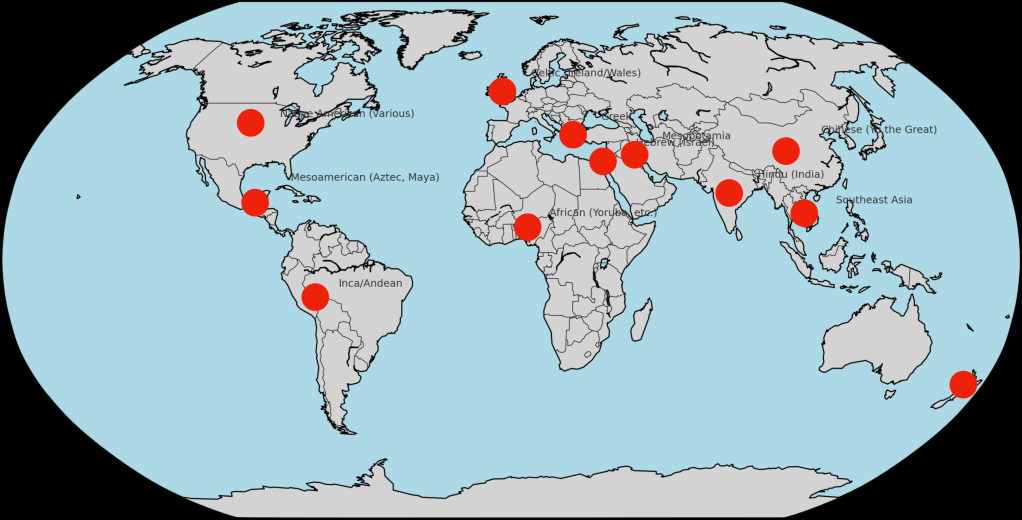
 Odd Sense of Zero